

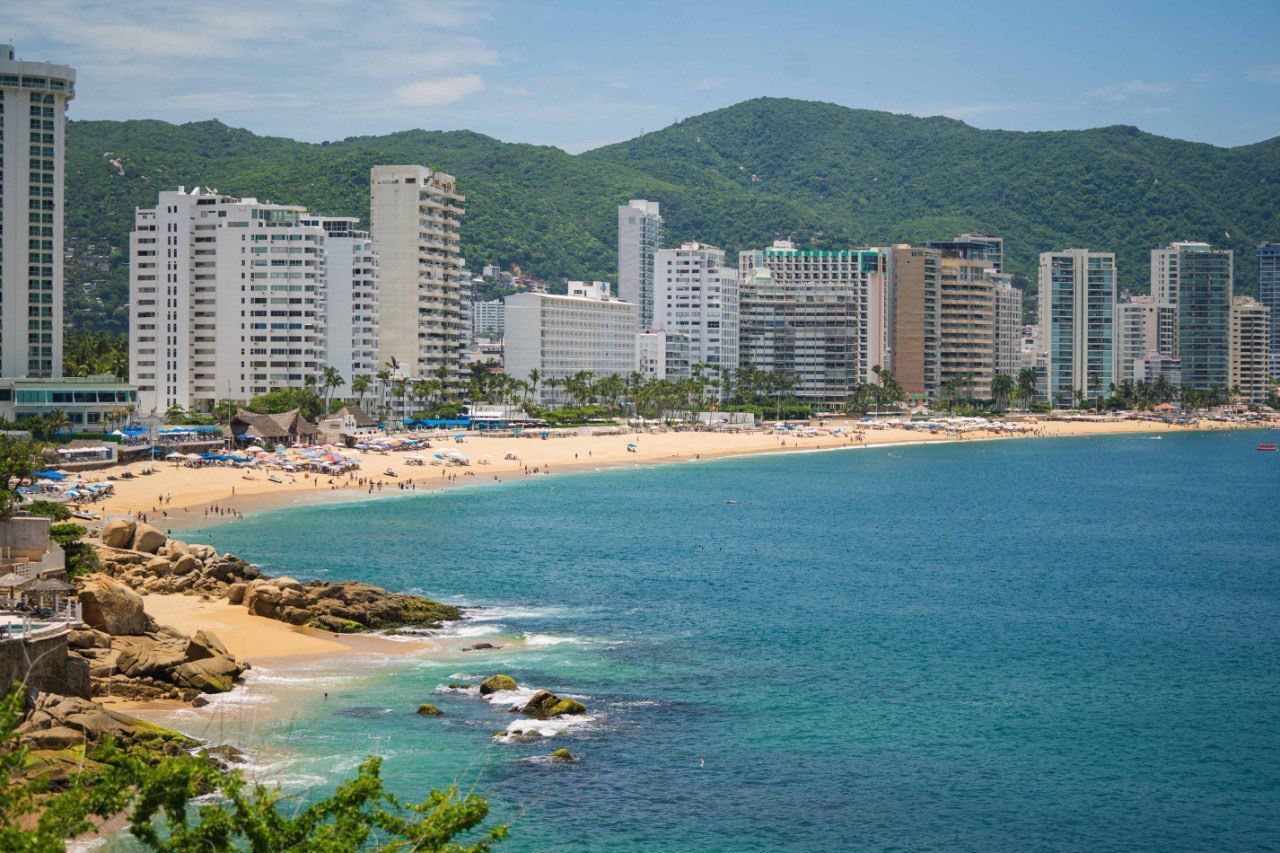
Decades ago, Mexico realized tourism could become far more than a complementary economic activity. Over time, isolated beaches, small coastal towns and provincial cities became part of an international economic machine capable of transforming entire territories.
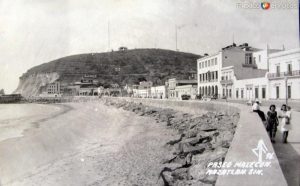
Today, tourism stands as one of the country’s most important economic engines. What initially appeared to be a strategy aimed at attracting foreign visitors gradually evolved into a development model deeply tied to real estate capital, tourism infrastructure and the territorial transformation of entire communities.
According to data from Mexico’s National Institute of Statistics and Geography (INEGI), the tourism sector contributed roughly 8.7 percent of the national GDP in 2024, generating an economic impact exceeding 2.7 trillion pesos.
Behind those figures, however, lies another, less visible reality.
Mexico stopped selling only beaches, landscapes and cultural heritage. By the late twentieth century, it had begun commercializing territorial access itself. Across the country, tourism complexes, luxury developments and residential schemes designed primarily for foreign buyers — especially Americans and Canadians — began to emerge.
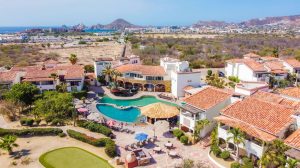
Tourism gradually evolved into a hybrid ecosystem where hospitality merged with ownership, investment and real estate speculation.
All-inclusive resorts, vacation clubs, private developments, beachfront condominiums and luxury residential communities began reshaping entire regions. In some destinations, these models completely altered land values and even changed how local residents could access housing and territory.
Mexico soon became one of the continent’s major tourism powers.
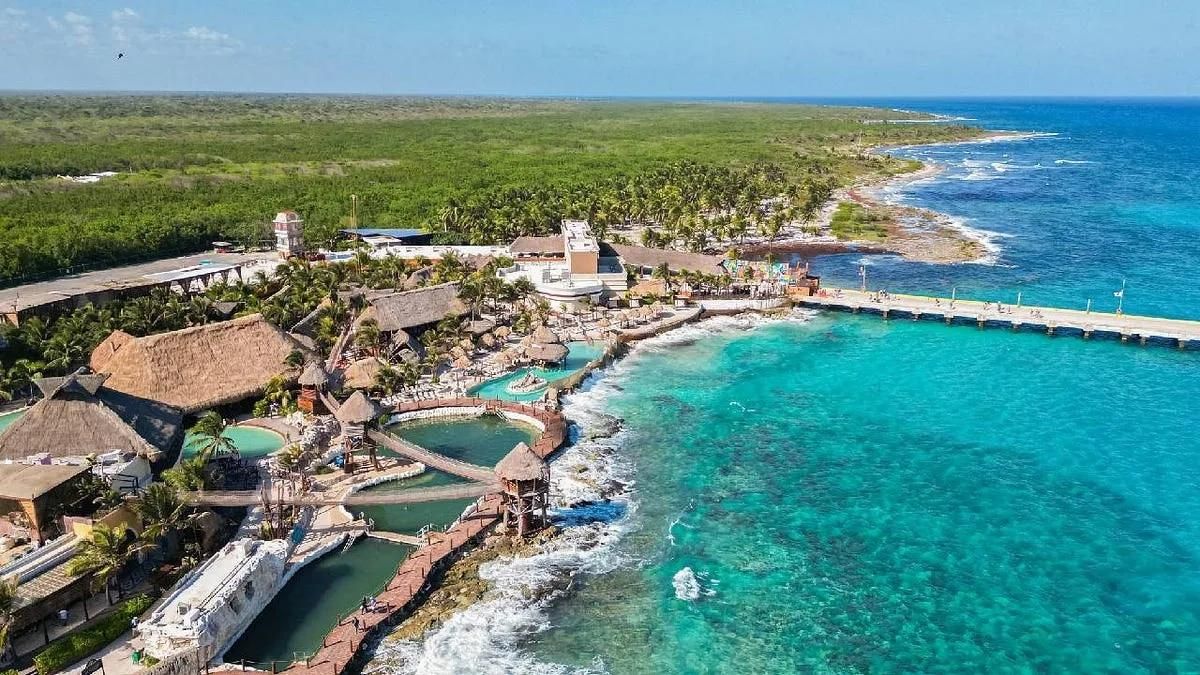
The beaches of the Mexican Caribbean started appearing among the world’s most desirable destinations. Los Cabos established itself as a premium market for high-income travelers. Puerto Vallarta and Riviera Nayarit evolved into international corridors of tourism investment. Tulum transformed from a small coastal community into a global showcase for luxury and real estate speculation. Even historic inland cities such as San Miguel de Allende became integrated into international residential circuits.
Mexico’s international image changed at the same time its territory did.
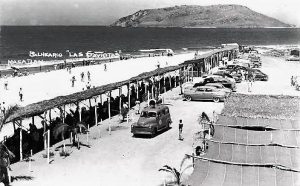
What were once fishing villages, communal ejido lands and agricultural regions gradually became high-value commercial spaces where land stopped being measured according to local standards and began operating under international — often dollarized — market dynamics.
Within that context, new mechanisms for accessing paradise also emerged.
Tourism was no longer limited to booking a hotel room. Visitors could now purchase vacation weeks, invest in residential clubs or partially own luxury beachfront properties.
The question eventually went far beyond vacations.
The real question became: who was actually buying the territory?
Lost Calm
Long before becoming one of the world’s most coveted tourist destinations, Tulum was little more than a small coastal settlement surrounded by jungle, sandy roads and scattered homes.
Life revolved around fishing, small-scale agriculture and a still-limited tourism industry. For years, the town remained relatively isolated even from the rest of Quintana Roo. The beaches were not yet crowded with private clubs, nor lined with luxury residential developments. The Caribbean Sea still visually belonged to the people who lived there.
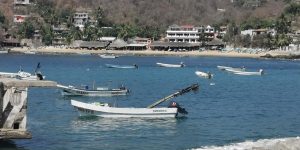
The first generations who inhabited Tulum remember a life defined by tranquility. Access was difficult, infrastructure minimal and land values relatively low. Much of the region remained dominated by vegetation, communal lands and small local settlements.
Then the rapid expansion of the Riviera Maya changed everything.
Boutique hotels, tourism complexes and luxury real estate developments transformed the region into one of the country’s most dynamic markets. Properties began being sold in dollars and land values multiplied within just a few years. The massive arrival of national and foreign investors triggered accelerated — and often chaotic — urban growth.
Today, Tulum faces mounting pressure on basic services, rising rents, real estate speculation and the gradual displacement of local residents toward peripheral areas.
What was once a quiet coastal community ultimately became an international showcase for luxury tourism and real estate capital.
Uneven Transformation
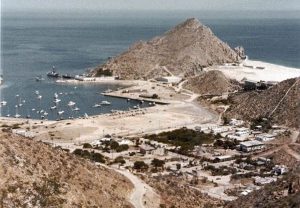
Something similar happened in Los Cabos.
Before the tourism boom, the region consisted of small fishing communities isolated within a semi-desert landscape where tourism barely existed. For much of the twentieth century, Cabo San Lucas and San José del Cabo maintained economic dynamics tied primarily to fishing and regional commerce.
But the construction of highways and airport infrastructure completely altered the region’s destiny. International hotel chains, golf courses and luxury developments triggered an accelerated territorial transformation, and what had once been virtually uninhabited stretches of land began turning into some of the country’s most exclusive real estate markets.
Today, Los Cabos ranks among Mexico’s most expensive tourist destinations. In several coastal areas, property prices and rents have become inaccessible even for many workers employed within the local tourism industry.
The Riviera Maya, however, perhaps represents the most extreme example of tourism-driven territorial transformation.
Before large-scale tourism development, much of the region consisted of jungle, small villages and scattered communities. Cancún did not even exist as a major tourist city. But beginning in the 1970s, one of the largest tourism projects in modern Mexican history took shape. The Mexican government promoted infrastructure, highways, air connectivity and hotel development throughout the Caribbean coast.
Decades later, the Riviera Maya-Cancún corridor became one of Latin America’s leading international tourism hubs. Major hotel chains, vacation clubs and real estate developments expanded across the coastline.
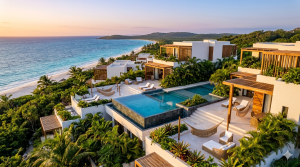
Economic growth was enormous.
So were the territorial consequences.
Rising land values, urban pressure and aggressive real estate expansion completely transformed the region. Today, much of the tourism land along the Mexican Caribbean operates under international investment and speculative dynamics.
Development or Ambition?
Another emblematic case is Acapulco.
Long before the massive arrival of international tourism, the city maintained a traditional coastal rhythm tied to the port, fishing and regional trade. For decades, Acapulco was the great symbol of Mexican tourism. Artists, business magnates and international celebrities regularly visited its bay.
Tourism growth brought hotels, infrastructure and economic development, but it also accelerated urban transformation. Real estate expansion gradually altered the natural landscape and intensified social contrasts between luxury tourist zones and working-class neighborhoods.
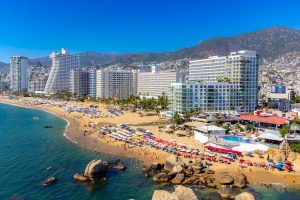
Over time, Acapulco lost part of its tourism dominance to emerging destinations such as Cancún and the Riviera Maya, although it remained one of the country’s major hubs for timeshares and vacation ownership — at least until Hurricane Otis once again exposed how deeply many Mexican regions depend economically on tourism.
San Miguel de Allende represents a different kind of phenomenon.
Its transformation was not built around beach tourism, but around the cultural and residential appropriation of a historic city.
After decades as a relatively quiet city in Mexico’s Bajío region — known for its colonial architecture and cultural life — San Miguel began attracting foreign communities, particularly retired Americans interested in purchasing property within a colonial city that remained comparatively affordable by U.S. real estate standards.
The growth of cultural and residential tourism profoundly transformed the local housing market. Many homes in the historic center were purchased by foreigners and converted into boutique hotels, galleries, restaurants or luxury residences.
Today, San Miguel de Allende stands among Mexico’s most internationally recognized destinations for residential tourism and foreign retirement. At the same time, rising housing costs and rental prices have begun altering the social composition of several parts of the city.
Mexico discovered that tourism could generate wealth, infrastructure and international recognition.
But it also discovered something else.
Paradise could be sold in pieces…
Descubre más desde EKTUNKUL
Suscríbete y recibe las últimas entradas en tu correo electrónico.





Deja una respuesta