
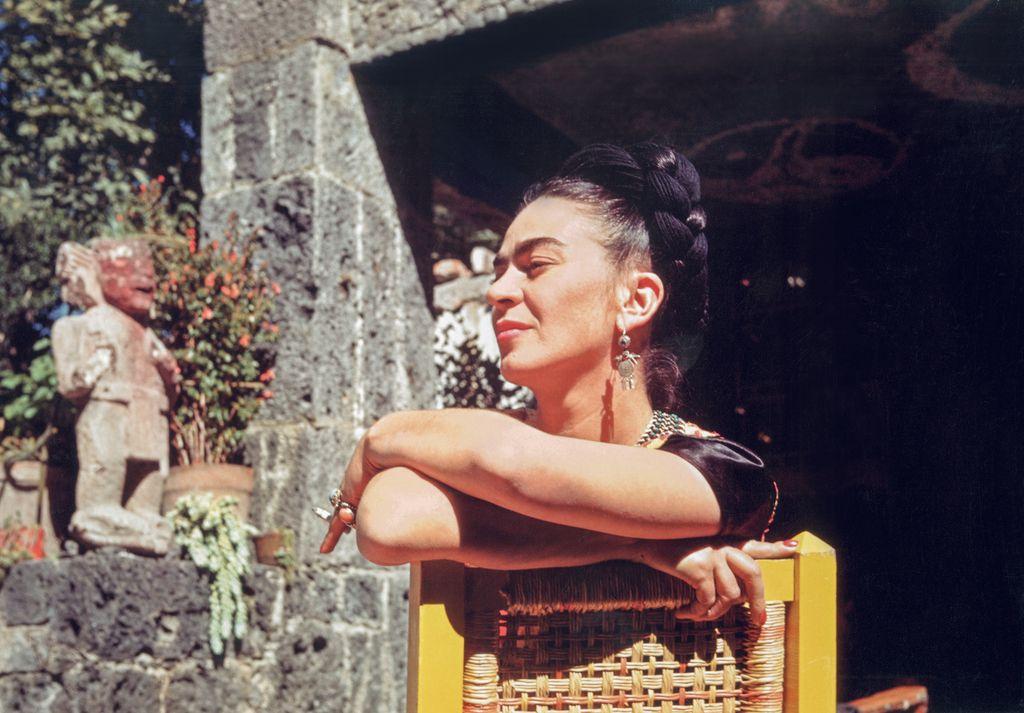
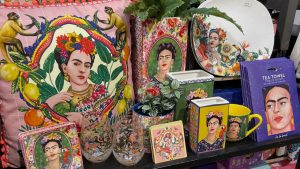
The face of Magdalena Carmen Frida Kahlo Calderón now decorates coffee mugs, designer socks, museum tote bags in New York, and the ideological passports of a mass-consumption feminism that devours her image as quickly as it empties it of meaning. The world has turned Frida Kahlo into a decorative object, a marketable symbol, a commercialized aesthetic of pain wrapped in flowers, eyebrows, and revolutionary slogans.
But somewhere beneath the merchandising avalanche, beneath the caricature consumed by global culture, there remains something far more uncomfortable: an artist of extraordinary rigor, deep political convictions, and a fierce love for life.
Frida did not paint merely to express suffering. She painted with precision, structure, symbolism, and intellectual control. Her work was never accidental emotional catharsis. Behind every self-portrait was a conscious visual architecture shaped by Mexican identity, European surrealism, indigenous symbolism, personal mythology, and political commitment.
Reducing her work to “the woman who suffered” is not only simplistic; it is profoundly unfair.
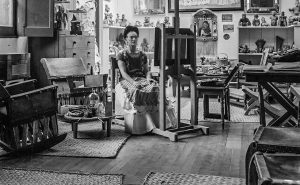
The commercialization of Frida Kahlo has also softened her ideological sharpness. Her image is often consumed detached from her communist militancy, her fierce nationalism, her contradictions, her difficult personality, and her deliberate construction of selfhood. She did not become an icon by accident. She understood visual identity before modern branding language even existed.
Yet the contemporary market transformed complexity into decoration.
Today, her face appears on cosmetic bags, fast-fashion collections, tequila labels, notebooks, and mass-produced souvenirs sold to tourists who often know little about her paintings. In many ways, the image survived while the artist was slowly buried beneath it.
And yet, her paintings remain.
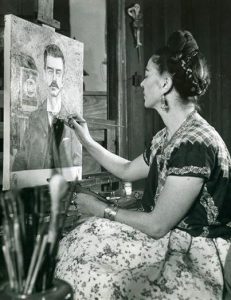
The technical discipline in works such as The Two Fridas, Self-Portrait with Cropped Hair, or The Broken Column reveals compositional intelligence far beyond the simplified mythology built around her. Her paintings are intimate, yes, but also politically charged, symbolically dense, and psychologically deliberate.
It is time to look at the oil painting, not only the X-ray.
Frida Kahlo was not merely the wife of Diego Rivera, nor simply a tragic woman immortalized by pain. She was an artist who understood image, politics, symbolism, performance, and national identity with unusual lucidity.
And perhaps that is precisely why the market found her irresistible.
Because modern consumption does not merely commercialize beauty; it commercializes conviction. It packages rebellion into products, complexity into aesthetics, and human depth into visual shorthand.
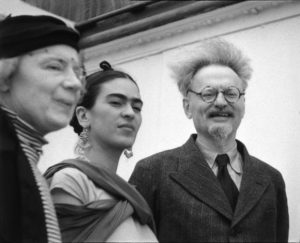
Frida became profitable not despite her contradictions, but because of them.
Still, there is something the commercialization machine never fully managed to erase: her vitality.
Photographs of Frida laughing, smoking, celebrating, drinking with friends, engaging in political debate, or simply staring defiantly at the camera remind us that she was never a passive victim trapped inside suffering. There was discipline in her painting, conviction in her politics, and appetite for life in her humanity.
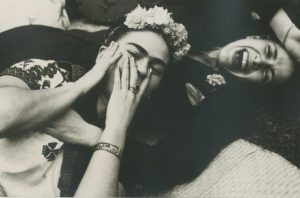
That may be the most forgotten Frida Kahlo of all.
Not the decorative icon.
Not the souvenir.
Not the endlessly reproduced face.
But the intelligent, difficult, politically committed, technically rigorous woman who insisted on living intensely despite pain, despite betrayal, despite illness, and despite becoming one of the most consumed images in modern culture.
The final inscription on her last painting did not read like surrender.
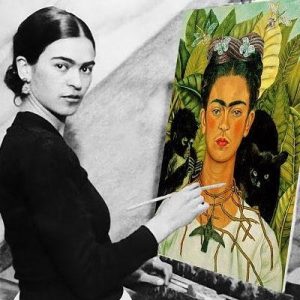
It read: VIVA LA VIDA.
More than a souvenir
For Ektunkul, reclaiming Frida Kahlo does not mean denying her pain or ignoring her tragedies, but restoring reality to her own life and work. She was not a victim of circumstance, nor an emotional byproduct of Diego Rivera, nor a rag doll for the souvenir industry’s commercial exploitation.
Descubre más desde EKTUNKUL
Suscríbete y recibe las últimas entradas en tu correo electrónico.






Deja una respuesta