

The NFL has officially released the schedule for the 2026 season and, as always, the debate began immediately: which teams received the most favorable path, which franchises are facing genuine survival runs, and which rosters appear truly built to play deep into February.
Although preseason projections often change dramatically as the year unfolds, analysts, sportsbooks, and league insiders already seem to agree on several points. The NFC once again looks brutally competitive, while some historic franchises may be entering particularly unforgiving scenarios before September even begins.
One of the main talking points following the schedule release is the Chicago Bears, whom several analysts have identified as the team facing the league’s toughest schedule based on opponents’ winning percentages from the previous season. The situation becomes even more fascinating considering Chicago enters 2026 after a season of accelerated growth under Caleb Williams and Ben Johnson, only to now face a far more aggressive NFC North alongside multiple matchups against established contenders.

However, more advanced projections — particularly those developed by Warren Sharp using Vegas expectations rather than past records — place the Arizona Cardinals as the team with the most difficult road in the entire league, followed closely by the Miami Dolphins, Carolina Panthers, and Dallas Cowboys. Dallas, for example, must navigate a particularly uncomfortable combination of difficult divisional games, demanding travel stretches, and consecutive matchups against projected playoff teams.
At the opposite end of the spectrum, several contenders appear to have benefited from far more manageable schedules. Projection models consistently rank the Detroit Lions as the team with the most favorable path in the NFL, followed by the New Orleans Saints, Cincinnati Bengals, and Cleveland Browns. Detroit continues to emerge as one of the strongest Super Bowl candidates due to offensive stability, organizational continuity, roster depth, and a significantly less punishing schedule than many other NFC contenders.
The Bengals could also become one of the AFC’s most dangerous teams if Joe Burrow manages to stay healthy throughout the season. Many analysts believe the combination of offensive firepower and schedule balance could make Cincinnati one of the league’s most explosive teams in 2026. Meanwhile, the Baltimore Ravens continue to appear among the most complete rosters in the AFC and remain near the top of multiple early championship projections.
Although the NFL seems to be slowly entering a generational transition phase, the Kansas City Chiefs are still viewed as the competitive standard of the AFC as long as Patrick Mahomes remains healthy. The problem for every contender is that the conference feels deeper than ever. Ravens, Bengals, Bills, Texans, Chargers, Broncos, and potentially even the Jets or Patriots could all compete for playoff positioning in a conference where every loss may carry immediate consequences.
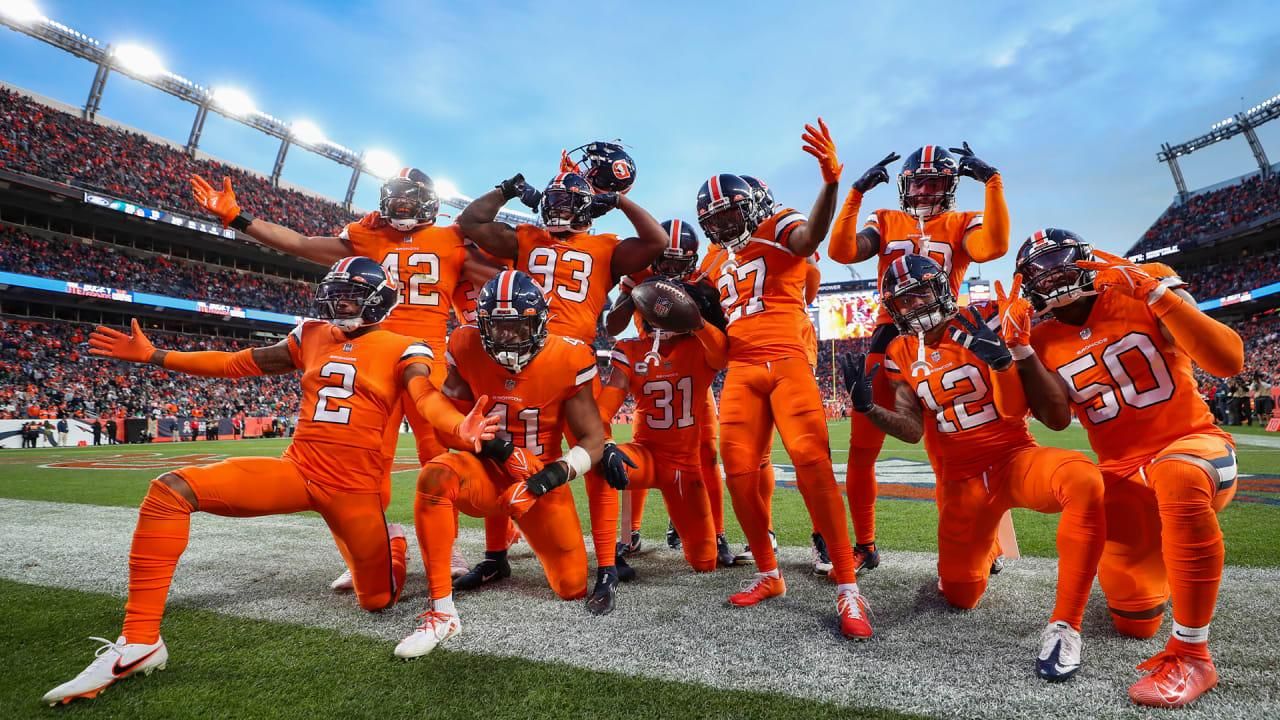
And yes, any serious NFL analysis in 2026 feels incomplete without discussing Denver.
Because if there is one franchise emerging from this offseason with legitimate arguments to challenge the AFC hierarchy, it is the Broncos. And not simply because of preseason optimism. The numbers, roster evolution, and overall trajectory from last season strongly support the conversation.

The biggest difference in Denver is that the project no longer feels like a rebuild — it feels like a contender. Bo Nix developed into something far more legitimate than many analysts expected during his rookie season: improved pre-snap recognition, outstanding play-action efficiency, fewer mistakes, and noticeably stronger offensive command as the season progressed. Sean Payton’s offense finally started to resemble an actual Sean Payton offense again, completely changing the national perception surrounding the franchise.
Denver also finished last season as one of the NFL’s most aggressive and consistent defensive units. Constant quarterback pressure, pass-rush depth, and a highly physical secondary allowed the defense to reach a level of maturity the organization had not displayed in years. With Patrick Surtain II fully established as one of football’s elite man-coverage defenders and Nik Bonitto evolving into a serious edge threat, many analysts already place Denver among the league’s top defensive groups entering 2026.

One of the most interesting aspects of Denver’s offseason was that the organization never attempted to reinvent itself. Instead, the front office focused on depth, protection, speed, and roster balance — moves typically associated with franchises that already view themselves as legitimate contenders. The overall perception following the draft is that the Broncos added valuable pieces without disrupting the identity of the project, while strengthening both defensive rotations and offensive support around Nix.
That is where the real challenge begins.
The Broncos no longer have a rebuilding schedule. They now have a contender’s schedule.
That means constant matchups against teams such as the Chiefs, Bills, Rams, Seahawks, Chargers, 49ers, Patriots, and Steelers, alongside a significantly larger prime-time presence. And perhaps that is the clearest signal of all: the NFL once again views Denver as a relevant franchise within the league’s competitive conversation.
Naturally, the biggest question is whether the Broncos can realistically contend for a Super Bowl.
The short answer is yes.

The longer answer depends on two critical factors: whether Bo Nix truly completes the jump into elite quarterback territory, and whether Denver’s offensive line can survive the physical demands of an extremely punishing season. Because talent, coaching, defensive structure, and roster identity certainly appear to exist. In fact, several early projections already place Denver among the AFC’s most dangerous teams alongside the Chiefs, Ravens, Bengals, Bills, and Texans.
While it remains impossible to know which franchises will ultimately confirm their projected level, several games already look capable of becoming instant regular-season classics. Matchups such as Chiefs vs. Bills, Ravens vs. Bengals, Lions vs. Eagles, Bears vs. Packers, and Cowboys vs. 49ers are already generating enormous anticipation. Yet the AFC West may ultimately become one of the most fascinating divisions to watch, as Denver appears to enter the season with legitimate arguments to challenge Kansas City’s dominance for the first time in many years.

Several franchises will arrive in September under enormous pressure. Dallas must justify years of investment without definitive results; Miami continues facing structural questions; the Jets appear to be entering a critical phase; and Chicago must prove its rise was not circumstantial. Meanwhile, teams like Detroit, Baltimore, Philadelphia, and Denver seem to be operating with far more mature and stable organizational structures.
The 2026 NFL season has not started yet, but one thing already feels clear following the release of the schedule: the distance between contender and disappointment may be smaller than ever.
And somewhere in the middle of that conversation, the Denver Broncos appear determined to place themselves firmly back at the center of the NFL stage.
Descubre más desde EKTUNKUL
Suscríbete y recibe las últimas entradas en tu correo electrónico.










Deja una respuesta