


Vacationing in Mexico has long ceased to be a one-size-fits-all experience.
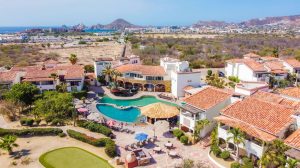
The country has developed a massive array of tourism models tailored to different income levels and consumer profiles.
Today, the market spans from budget-friendly hotels for domestic travelers to all-inclusive resorts for international visitors, luxury spas, boutique hotels, private clubs, vacation homes, and exclusive ultra-premium complexes.
In hotspots like the Riviera Maya or Los Cabos, a single night’s stay can range from a few thousand pesos for basic accommodations to several thousand dollars at luxury resorts. Leisure time has essentially fractured along economic lines.

It was precisely this shift that fueled the rise of models like timeshares and fractional ownership.
Although often confused, they operate under entirely different structures.
Timeshares function primarily on a right-to-use model, where buyers secure the option to use a property during specific times of the year. In Mexico, this system is regulated by the Federal Consumer Protection Agency (PROFECO) and various tourism service guidelines.
Fractional ownership, on the other hand, is closer to an equity stake in a real estate asset. Depending on the legal structure, investors can purchase a proportional share of a property. While this distinction might sound technical, it carries completely different financial and legal implications.

While some models focus strictly on vacation use, others blend in real estate investment, property appreciation, and equity. Hybrid schemes mixing leisure and investment have begun booming in premium destinations. It is no longer just about staying by the ocean.
Now, people can buy vacation weeks, memberships, usage rights, or partial shares in luxury developments.
Tourism has shifted from selling mere experiences to commercializing partial access to prime real estate.
Confused Authorities

One of the most striking aspects of Mexico’s tourism-real estate boom is how inconsistently official institutions view these various vacation models.
While timeshares are clearly defined in official economic classifications and tourism documents, fractional ownership continues to operate in a legal gray area.
The National Institute of Statistics and Geography (INEGI) explicitly recognizes timeshares within categories related to tourism lodging and vacation usage rights.
Official data tracks variables such as timeshare units, available beds, and exchange networks. In contrast, fractional ownership lacks a clear, standardized category within national statistics.

This is a critical distinction. Timeshares are institutionally treated as a tourism service, whereas fractional ownership behaves more like real estate investment, co-ownership, and equity asset management.
This ambiguity has led many developers to blur commercial and legal concepts. In several cases, buyers are left unsure whether they are acquiring a right-to-use option, a vacation membership, or an actual piece of real estate.
For years, PROFECO has issued warnings regarding timeshare contracts due to disputes over cancellations, aggressive sales tactics, and misleading commercial expectations.

Meanwhile, tourism organizations and real estate associations keep pushing increasingly sophisticated vacation property models. Another key factor is the heavy international presence in the market.
The main destinations using these models rely heavily on American and Canadian tourists. The influx of foreign buyers has ultimately reshaped the Mexican vacation real estate market.
In many coastal regions, land prices are now dictated by global standards. Residential tourism has successfully plugged Mexico into international vacation investment circuits.
Discover more from EKTUNKUL
Subscribe to get the latest posts sent to your email.









Leave a Reply