

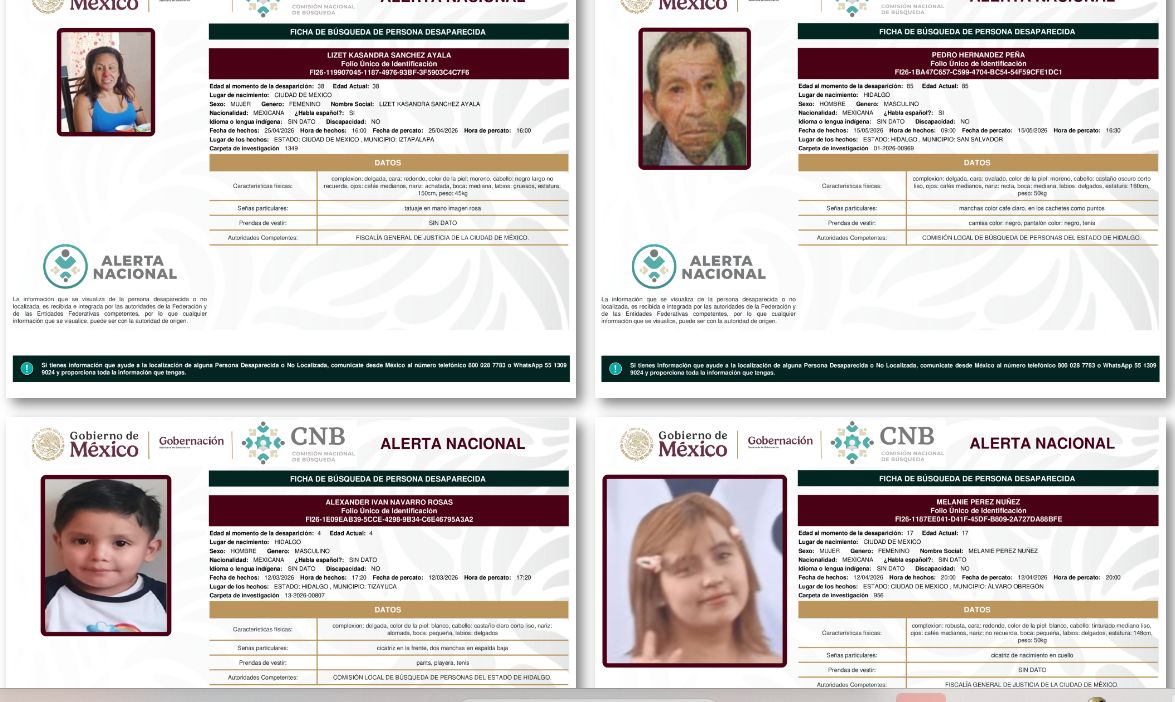
María Luisa received a call from her daughter-in-law on October 4, 2012, at 9:00 p.m. The young mother told her that her husband, David, had left home at 9:00 in the morning to buy milk and diapers for their newborn baby, and that she had heard nothing from him since. That was when the anguish and the search began. Nearly 14 years have passed, and there is still no news of David. He vanished.

These are the same symptoms of a disease that has afflicted Mexico for years and that, apparently, has left the country in intensive care with no clear signs of recovery: a person stops answering calls; they fail to arrive at the place where they were expected to be; their phone remains switched off or stops showing any activity.
Then families begin searching for explanations: an accident, an unexpected problem, a communication failure. But as the hours go by, a possibility emerges that no one wants to confront: the person has disappeared.

That moment marks the beginning of a process in which the first decisions are crucial. Action must be taken while trying to understand what happened, gathering information, contacting authorities, and activating every mechanism available to locate the person.
Filing a Report
One of the main problems surrounding disappearances is that many families do not know what steps to take during the first hours or what their rights are when dealing with the institutions responsible for searching for missing people.
The most important thing to know is that there is no need to wait before reporting a disappearance, as was once commonly believed. A specific amount of time does not have to pass before filing a report. This is established by Mexico’s General Law on Forced Disappearance of Persons, which states that searches must begin immediately and that there is no waiting period required to report a disappearance.
Furthermore, Article 80 allows any person to request a search through a notice, report, or formal complaint, while Articles 86 and 89 require authorities to begin actions without delay.

The first step for a family should be to report the person’s absence and provide all available information that may help identify them and determine their last known movements, understanding that the initial information can be decisive.
When reporting the disappearance, it is essential to gather as much information as possible about the missing person: full name, age, a recent photograph, physical description, identifying marks, clothing worn the last time they were seen, the place, date, and time of the last contact, details about recent activities, as well as information regarding vehicles, phones, or personal belongings.
Every piece of information can create a possible search lead: an updated photograph may allow identification in public spaces; information about the last known location can help reconstruct movements; and a recent conversation may provide clues about the circumstances before the disappearance.

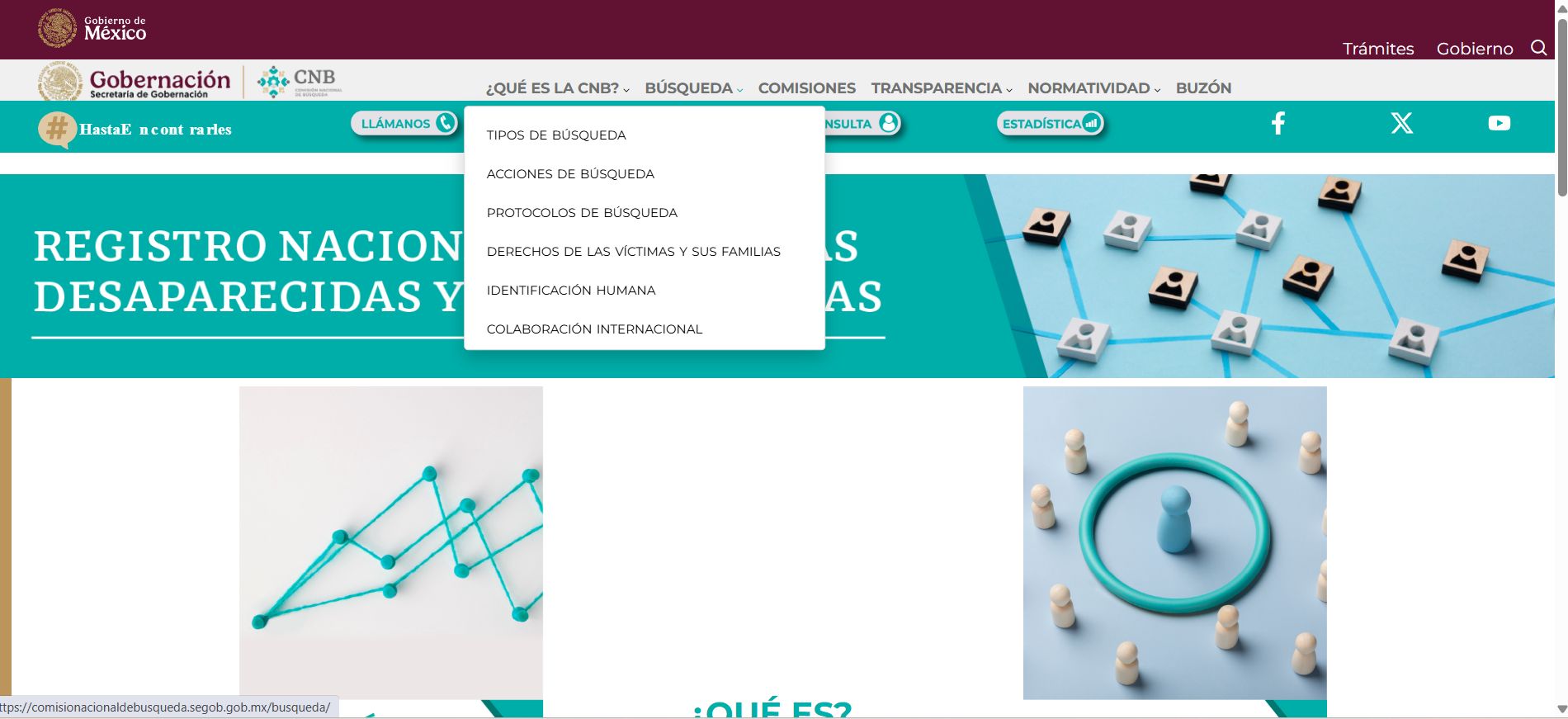
To report a missing person, families must approach investigative authorities and justice institutions, as well as the corresponding search commissions. The report or complaint should activate locating mechanisms and establish communication among the institutions involved in the search.
However, for many people, the first contact with the system becomes a difficult stage. There are testimonies published by relatives and search collectives describing their concern over having to insist that authorities treat the disappearance with the urgency it requires.
For this reason, in many cases, the search begins before an official response is ever received.
Immediate Actions
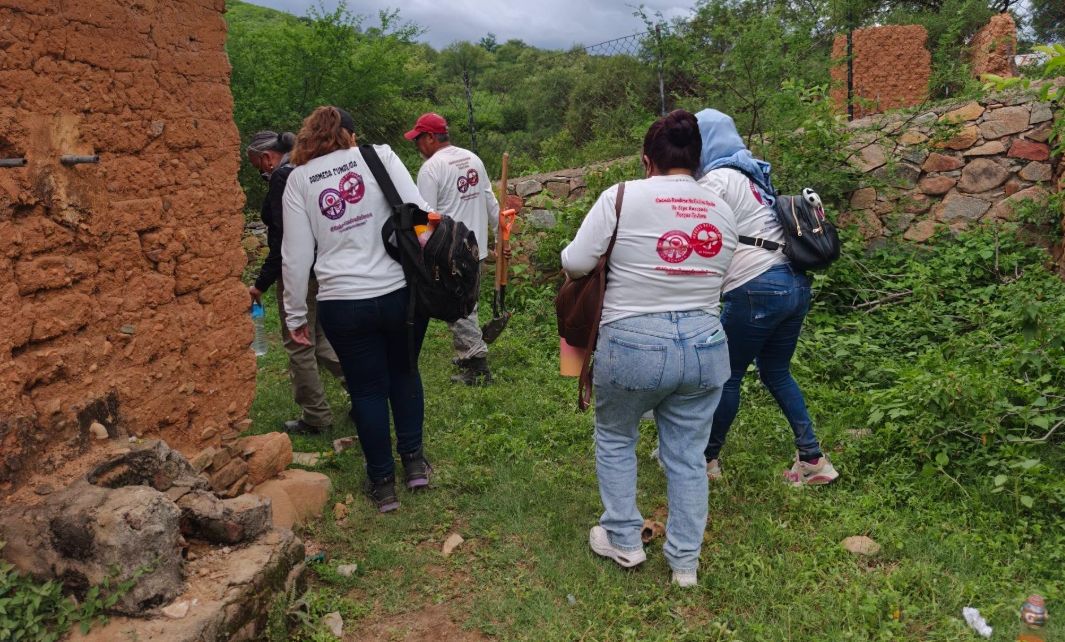
While completing the initial procedures, relatives, friends, and those reporting the disappearance often begin a parallel search: sharing photographs on social networks, asking acquaintances for help, visiting hospitals, contacting civil organizations, and looking for information in places where some clue might exist.

Yes, this includes social networks such as Facebook, X, TikTok, and other platforms that in recent years have become tools used to make cases visible. Through these channels, a publication can reach people who had contact with the missing person or provide information that had not previously been considered.
Does it work?
Of course it does. And it also reveals that, in the face of uncertainty, society itself becomes the first resource families turn to in order to expand the search.
Yes. There are responses:
“My way of showing solidarity with all of you is by sharing as many publications as I can. We are all one in something called love. It is that love for our loved ones, for each of our family members and friends, that unites us UNTIL WE FIND THEM. It does not matter if I do not know them; love is love, and I will continue sharing as much as I can UNTIL WE FIND THEM”, wrote Micaela in a Facebook post by the Movement for Our Disappeared in Mexico (MNDM).
The reality is that as days pass, families begin carrying out tasks that would normally belong to authorities: collecting information, creating search files, establishing contacts, organizing search efforts, and learning legal and administrative procedures.
A disappearance transforms the lives of those who search: mothers, fathers, siblings, and partners abandon their usual routines to focus on answering a question that, unfortunately, remains unanswered in thousands of cases:
Where are they? What happened to them?
The first hours mark the beginning of a process that can last months or even years.
The search for a missing person begins with one immediate action: recognizing the absence, reporting it, and demanding that the response begins from the very first moment.
The National Network of Links (REN) was created in 2014, bringing together 1,998 members and representing 2,666 cases of missing family members within the collective. Its work focuses on promoting and strengthening organizational processes, encouraging broad network-based search efforts, and supporting the creation and reinforcement of institutions responsible for searching for missing persons and providing assistance to their families. It is a space for coordination among relatives of disappeared persons whose objective is to find and return every missing person in Mexico to their families. REN works through collaboration and the strengthening of different search processes led by relatives of missing people throughout the country. It does so by sharing knowledge, resources, experiences, and organizational practices horizontally, while providing solidarity and support to the searches carried out by its members.
Discover more from EKTUNKUL
Subscribe to get the latest posts sent to your email.











Leave a Reply