


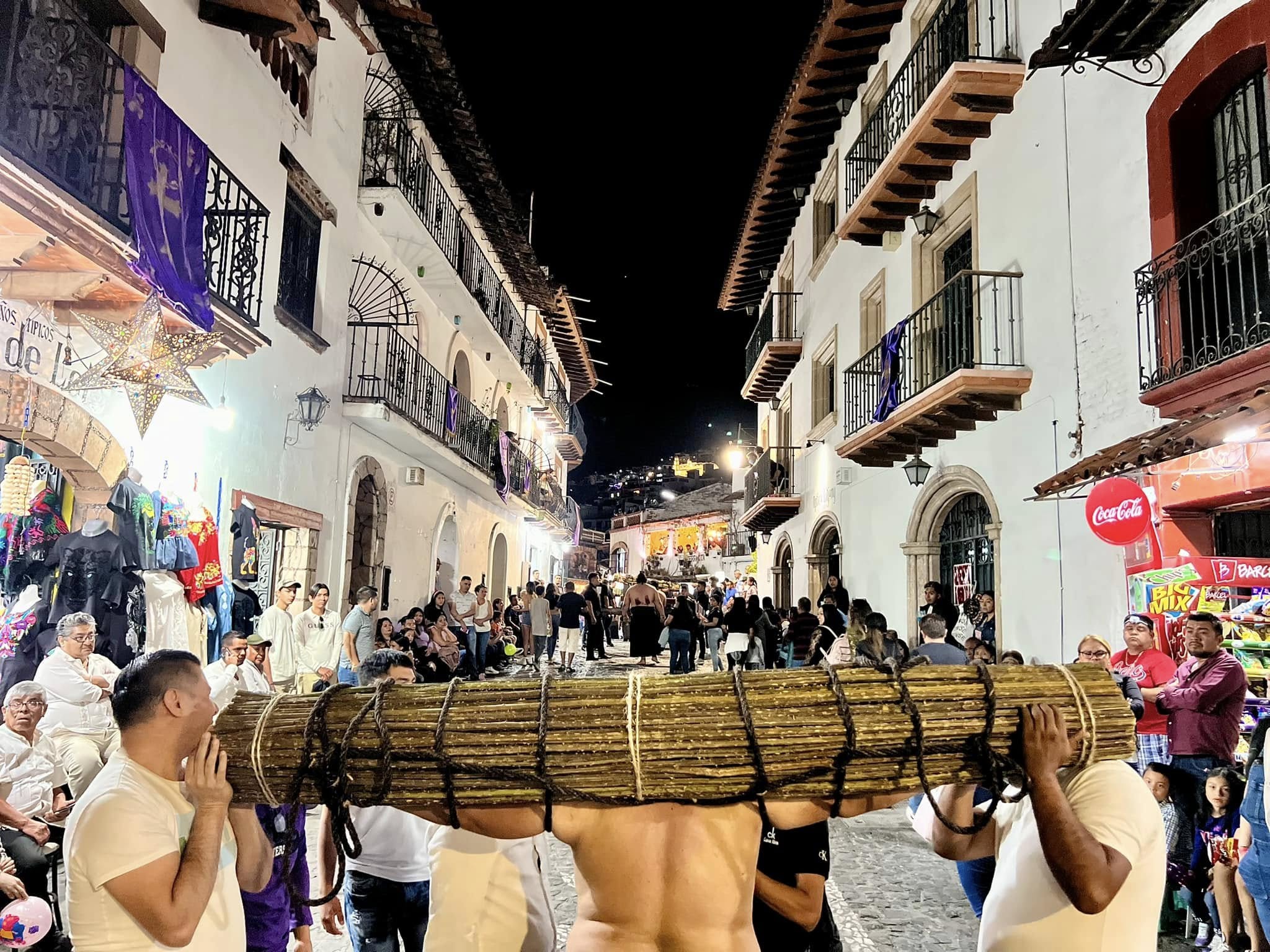
The cobblestone streets of Taxco bear the weight of thorny crosses, bare feet, and the sound of dragging chains. It is not just devotion; it is a ritual that hurts, that marks the skin and the soul under the pretext of faith.
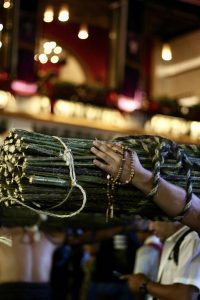
I was there years ago, witnessing a procession where the crucified ones advanced barefoot, faces covered, carrying promises and penances heavier than the wood. Bleeding shoulders and scarred backs were, among them, the common denominator.
As a result of Holy Week, Mexico transforms into a living mystical stage of religious and mestizo syncretism, where Spanish Catholicism merges with the indigenous roots of a people hungry for God.
This 2026, it will begin once again, at the end of March and the beginning of April.
From the Colony to Mestizaje
Holy Week arrived in Mexico with the Spanish conquerors in the 16th century, but it did not remain in cold masses. It wove itself into pre-Hispanic customs, such as the sacrifice and penance rituals of the indigenous peoples of that time, who thus managed to keep part of their essence hidden from everyone’s sight.

That is why in places like Iztapalapa, the Via Crucis is not theater; it is a representation dating back to 1843, inspired by a cholera epidemic that forced the locals to promise eternal devotion. A commitment that, decades later, draws millions, but whose origin was practical: a mix of fear, faith, and community.
Taxco is a good example. With its colonial silver, it turned penance into painful art, influenced by Spanish brotherhoods but adapted to the mountainous terrain of Guerrero. It is not just religion; it is living history, where public pain expiates collective sins.
Key Dates in 2026
According to the liturgical calendar, Holy Week 2026 in Mexico runs from Sunday, March 29 to Sunday, April 5. Here is a day-by-day breakdown:
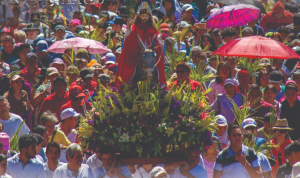
March 29 is Palm Sunday, commemorating Jesus’ triumphant entry into Jerusalem, where the people welcomed him with palms and olive branches, as told in the Gospels. In Mexico, palms are woven into clusters and taken to be blessed in church, though the case of San Miguel Néjapa (Oaxaca) stands out, where they are made with indigenous motifs.
Then come March 30 and 31, and April 1 (Holy Monday, Tuesday, and Wednesday). These are the preparatory days; people buy candles, some fast, others pray. History is about to repeat itself, and once again the Son of God will face his fate… for us.
Holy Thursday (April 2) is the moment of the Seven Churches visitation; the devout visit seven churches across the country. The Last Supper is also reenacted in every plaza. Jesus is pointed out with a kiss on the cheek, and we all know it was Judas who betrayed him—at least that is what we have been made to believe, and it has worked because in Mexico we even have a saying to remember it: “Not even Judas was that treacherous,” we say, pointing to whoever broke our trust.
There are also processions like the one in Taxco, Guerrero, where the “encruzados” carry bundles or rolls of zarza thorns on bare shoulders and heads covered with black hoods, seeking forgiveness and anonymity. The Procession of the Christs lasts all night on Holy Thursday, with colonial silver images. It is raw: real blood, visible penance. Taxco, a Magical Town, lights up with candles, but pain is at the center of everything.
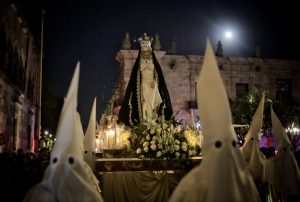
Reenactments have begun. Those in Iztapalapa and Tacubaya are the oldest in Mexico City, but across the country, Puebla stands out with its route from the Temple of San Francisco to the Chapel of Calvary; Querétaro follows with thorns and chains in historic temples, and the Judea of San Martín de las Flores in Guadalajara is considered the second most important in our territory.
A parenthesis is worth here. The Via Crucis in Iztapalapa has more than 180 years of tradition, with 5,000 participants and 2 million spectators; a local actor plays Christ, carrying a real cross up steep hills, and it is not a spectacle—it is a collective vow from colonial times. In 2026, expect crowds, but arrive early to see the preparations on Cerro de la Estrella.
Good Friday (April 3) is the most painful day. Pontius Pilate washes his hands when the crowd decides Barabbas the thief is less guilty than the Son of God and frees him. The mob, inflamed, does not hesitate to answer the Roman prefect’s question about the fitting punishment for someone in whom he finds no guilt: “Crucify him!” Jesus walks the path beaten, thirsty, falls three times, and when he finally reaches the end there is no rest. He will be tortured, crucified… dead… That is why there are processions like those in Taxco, Puebla, or Querétaro, where penance and pain are protagonists to share the suffering.
In Mexico, examples like the Good Friday Procession in Puebla draw crowds.
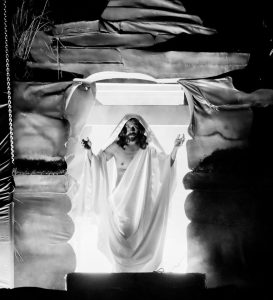
Holy Saturday (April 4) is a day of silence and reflection in the Christian liturgy. It commemorates the repose of Jesus’ body in the tomb and is marked by an atmosphere of mourning. Vigil, fasting, and the death of the traitor. As part of the tradition, representations of Judas are burned in the plazas. I remember that years ago it was customary to throw water at people on the street and organize “water wars” with the liquid, but so much waste, combined with other issues, has taken its toll, and now that is a crime.
Easter Sunday (April 5) is a day of joy because Christ Jesus rose. There are masses and celebrations everywhere.
Recommendations?
If you do not like crowds, skip Iztapalapa and opt for the Via Crucis in Cuetzalan (Puebla), which is less commercial and is 4 hours from Mexico City. You are also obliged to try the regional food; if you arrive in CDMX, you have to try capirotada (bread with dried fruits) or romeritos with mole. A market like Coyoacán is a very good option.
Where there are people there is trash, and as the new generations say, that is a “facto.” The commitment is to care for the environment; also remember basic safety and health measures—wearing a face mask would be a good idea. Think of everything: if you plan to visit a Magical Town during those dates, we recommend booking in advance.
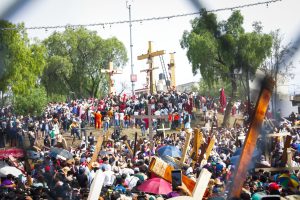
Remember, Holy Week is not just holidays; it is a mirror of Mexico: pain, resilience, and mestizo celebration. In 2026, with dates from March 29 to April 5, it is a good opportunity to connect with something deep.
There are endless alternatives, and if you truly want to live a unique experience, you should attend the Via Crucis in San Lucas Zoquiápam, Oaxaca, with Zapotec influences, or go to Michoacán to experience Tzintzuntzan. In this magical Mexico, you have more than enough options to live and experience the Passion of Christ…
Subscribe to our newsletter for more hidden guides of Mexico, all for you at ektunkul.com because everything resonates in our Mexico…







Deja una respuesta