


This article is also available in Spanish at Ektunkul
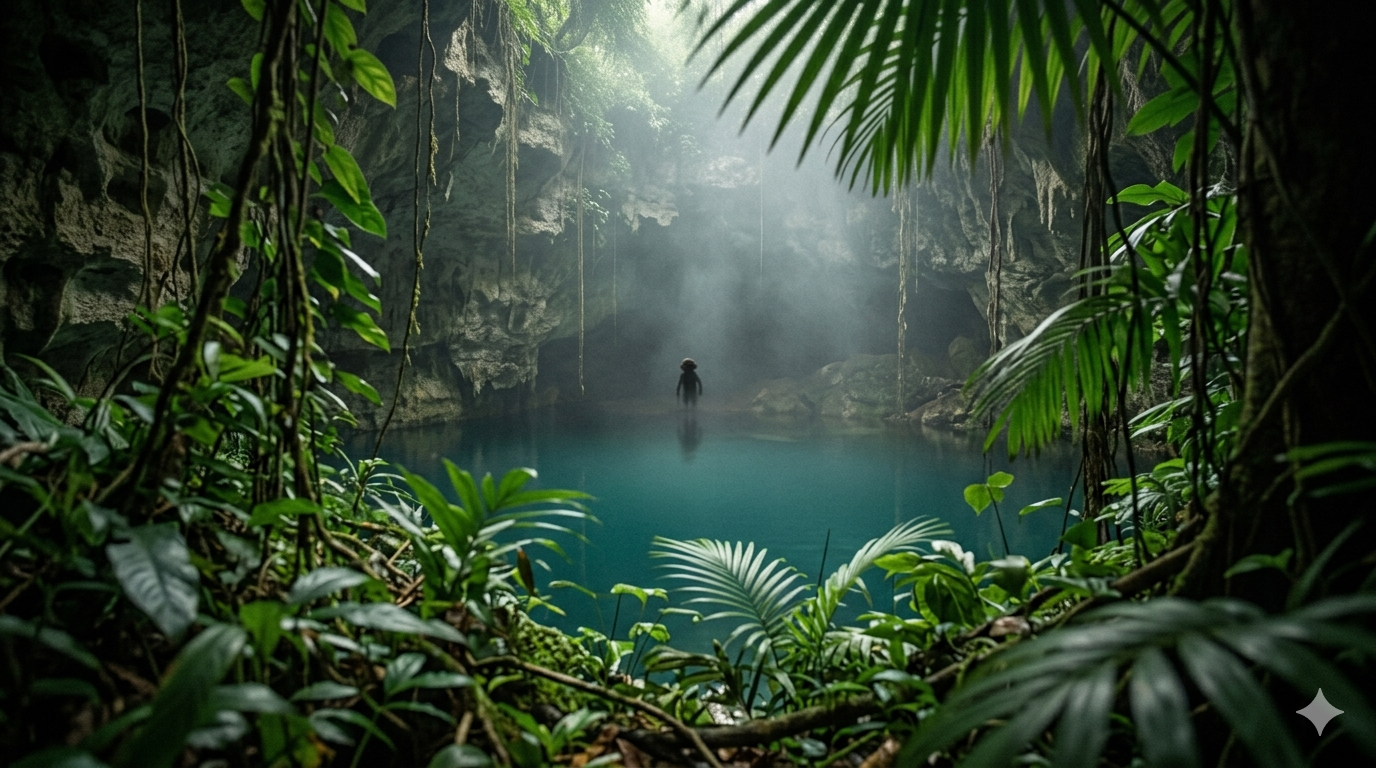
If you have ever walked through the jungles of Southeast Mexico and heard a sharp whistle that seems to come from nowhere, or felt a subtle yet persistent sensation of being watched from the foliage, you might have unknowingly crossed the threshold of an Alux. These beings, barely standing as tall as a child’s knee, are not mere clay figures or children’s bedtime stories; they represent one of the most vibrant and respected connections between pre-Hispanic Mexico and the modern reality of the region.

The Forbidden Ritual: Clay, Honey, and Magic
The existence of an Alux is not an accident of nature but a mystical act of creation bordering on the alchemical. According to tradition, an Ah men (shaman) molds them using virgin clay extracted from the depths of caves where sunlight has never reached and where no woman has ever set foot. For nine nights, the figure is nourished with honey, wild flowers, and ritual potions under the protection of the moon. Once «activated» in secret ceremonies, these guardians bond with the land and their protector, becoming tireless sentinels of the milpas (cornfields), cenotes, and grottoes.
Between Blessing and Mischief: The Code of Respect
The relationship with an Alux is a pact of absolute reciprocity. Those who honor them with offerings of sacá (a sacred corn drink) or tobacco are rewarded with prosperous harvests and protection against intruders. However, the line between their benevolence and their mischief is thin. An insult, a tree cut without permission, or simply ignoring their presence can trigger a series of inexplicable phenomena: from objects vanishing before your eyes to the dreaded «mal de aire» (evil wind)—a spiritual ailment that modern doctors cannot diagnose, but which locals heal through rituals of cleansing and forgiveness.
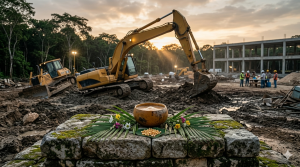
When respect is broken, the Alux’s playful nature turns into a baffling hostility. Their «mischief» is no simple game; it begins with labyrinthine whistles that disorient travelers and inexplicable noises in the dead of night. If the offense persists, these beings are capable of moving heavy construction machinery, causing cattle to flee, and casting «evil winds» that lead to fevers and illnesses beyond conventional medical explanation. In the construction sites of the Riviera Maya, engineers tell stories of machinery that won’t start or walls that collapse without technical cause, attributing these events to the fury of guardians who did not receive their offering of sacá or balché (a sacred fermented drink made from tree bark, water, and honey).
Modernity Bows to the Ancestral
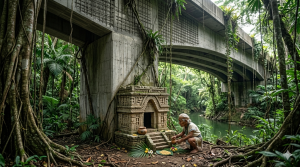
What most captivates the modern visitor is seeing how engineering and luxury have had to yield to these guardians. In the heart of the Riviera Maya, it is common to find tiny temples built under bridges or alongside world-class hotel developments. This is not tourist decoration; it is a pragmatic security measure. Architects and engineers have learned, sometimes the hard way, that for a project to proceed without strange incidents or tools vanishing into thin air, it is necessary to build them an altar and request their permission before moving a single stone.
A Legacy Pulsing in the Jungle
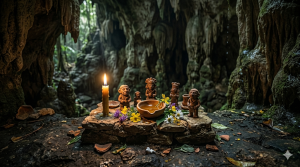
The Aluxes remind us that in Mayan lands, the past is not buried; it breathes and watches. Whether through stories that go viral on social media or the respectful silence of a farmer leaving his first corn on an altar, their mystique continues to draw those seeking something more than just sun and sand.
At Hidden Mexico, we invite you to listen carefully on your next trip: if the jungle whistles at you, do not run; simply offer a word of respect and continue your journey through the domains of the masters of time.
Discover more from EKTUNKUL
Subscribe to get the latest posts sent to your email.





Leave a Reply