


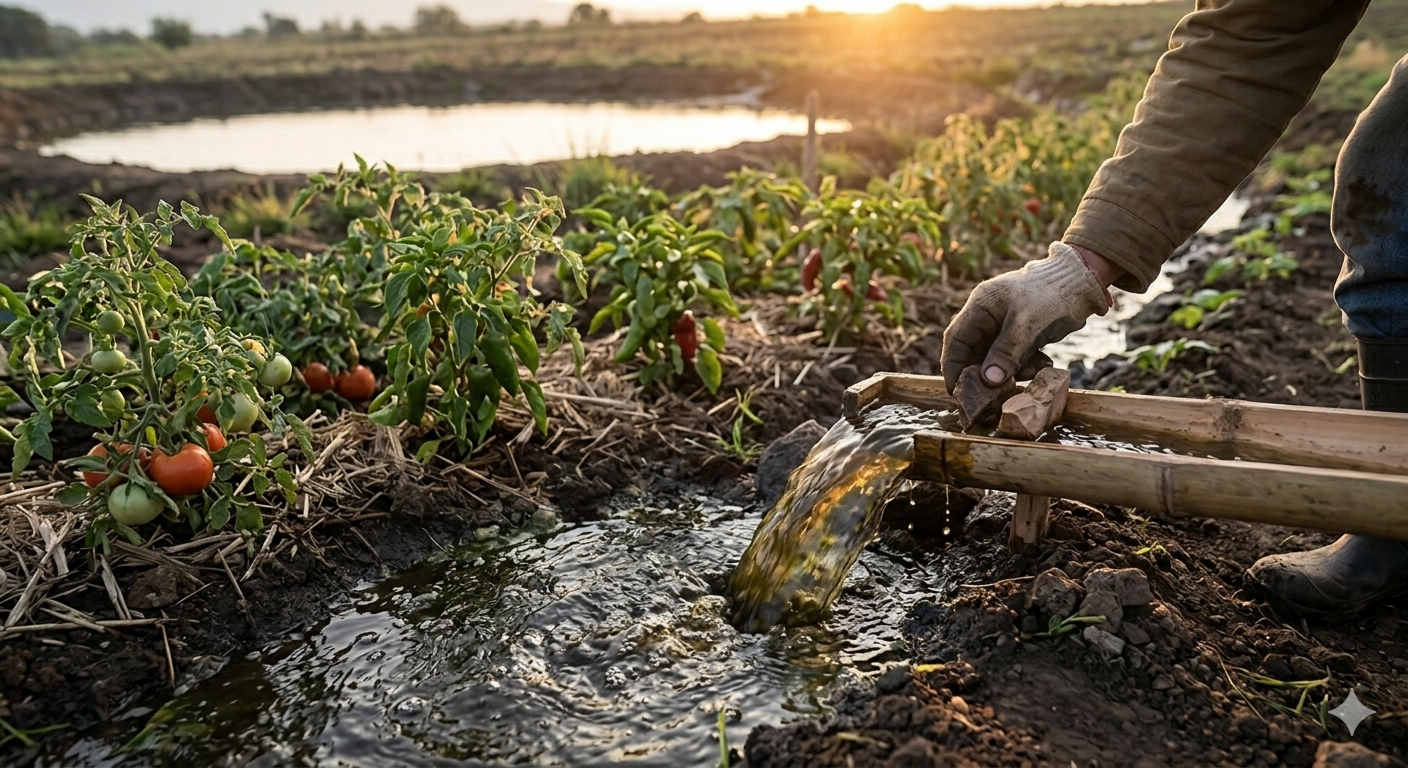
In a landscape where water stress has shifted from a statistic to a bankruptcy factor for regenerative projects, water can no longer be treated as a passing resource. The permaculture pond emerges as the ultimate strategic infrastructure: a piece of engineering that emulates the purification processes of natural wetlands to create total autonomy. It is not just a water tank; it is a high-efficiency biological reactor whose main components are fish, plants… and ducks. Yes, ducks.

Faced with the climate crisis and the fragility of food supply chains, ponds interact in perfect symbiosis. It is not merely a reservoir, but a living cycle that captures rain, generates clean protein, purifies the environment, and enriches soils—ensuring food freedom while restoring the planet. Our Mesoamerican ancestors mastered water management with reservoirs, chinampas, and integrated wetlands. Modern permaculture adapts this wisdom, imitating these ancestral systems to promote biodiversity without external inputs.
The Synergy of the Links
The viability of this system lies in its self-cleaning capacity through aerobic biofiltration. The design divides the body of water into tactical zones: deep areas maintain coolness and thermal stability, while «regeneration» zones (shallow shorelines) act as the system’s liver.
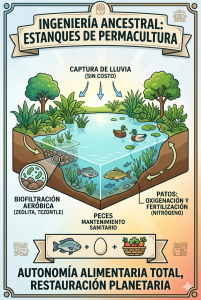
On these shores, a bed of porous substrates such as zeolite or tezontle (volcanic rock) serves as a home for bacteria that transform waste into pure fertilizer. Here, every inhabitant has a fundamental job: aquatic plants absorb nitrates for growth, preventing the water from stagnating; fish act as the sanitary maintenance crew by eliminating larvae; and ducks are the mechanical engine, as their swimming oxygenates the surface while their manure injects the nitrogen necessary to keep the life cycle moving.
It is a machine where each biological input saves energy and fertilizer costs. It is a balanced microcosm: tilapia and carp devour larvae and algae, releasing waste that plants like cattails and duckweed transform into nutrients. Then, ducks and geese patrol, consuming insects and vegetation while their droppings fertilize both fish and soil. The cycle then begins anew, achieving total self-sustainability without pumps or chemicals.
From Strategy to Action
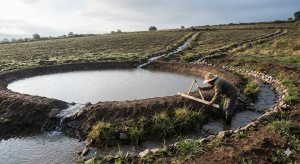
Building a high-performance pond requires identifying the key point of the landscape. The ideal site is a natural depression or an area where runoff lines converge, allowing the pond to fill for «free» with rainwater. It must be kept away from deep-rooted trees that could puncture the structure, yet close enough to cultivation zones to facilitate the use of enriched water.
The process begins with reading contour lines to ensure captured water stays on-site. Excavation must be stepped, creating underwater terraces that allow for the planting of different vegetable species according to their depth tolerance. In porous soils, the use of high-density geomembranes is indispensable, while in clay-heavy soils, organic compaction techniques can be used. Success depends on introducing vegetation first, waiting for the ecosystem to stabilize, and finally integrating the fauna that will keep the cycle in motion.
The Social Return
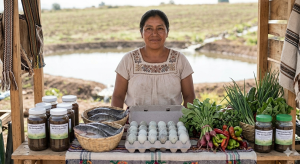
To speak of a pond is to speak of sovereignty. The social cost of water dependency is extremely high, and this system resolves it by turning a vulnerability into a business opportunity. A well-managed pond allows for small-scale fish farming, the production of eggs and poultry meat, and the creation of a microclimate that increases the yield of surrounding crops by 30%, according to data from the Food and Agriculture Organization of the United Nations (FAO).
Furthermore, studies from the Mexican Institute of Water Technology (IMTA) confirm that these systems reduce the water footprint and function as thermal radiators, protecting agricultural investments from extreme frosts. Ultimately, the pond does not just quench the earth’s thirst; it generates a resilience infrastructure that allows rural communities and independent producers to negotiate from a position of abundance rather than scarcity.
Lea este artículo también en español aquí
Descubre más desde EKTUNKUL
Suscríbete y recibe las últimas entradas en tu correo electrónico.




Deja una respuesta